Cart
0
Most customers who buy a Shiva, Ganesha or Krishna canvas from us ask the same question before they hang it: where is it supposed to go? There are two answers — what the Vastu tradition suggests, and what works as interior design. They agree more often than you would expect.
What the tradition says
These are conventions from Vastu Shastra, followed widely across India as a matter of custom and belief. We are setting them out as tradition, not as claims about outcomes — many people find them meaningful, and that is reason enough to know them.
- North-east (Ishanya) is the corner for the divine. A pooja space or devotional artwork is traditionally placed here, with the image facing west or south so the person praying faces east or north.
- Ganesha near the entrance. Ganesha is the remover of obstacles, so an image is often placed at or facing the main door — either just inside, or on the wall the door opens towards.
- Avoid the south wall for deities. The south is traditionally associated with Yama, and devotional images are usually kept off that wall.
- Not directly facing a bathroom or under a staircase. Both are considered inauspicious placements for an image of a deity.
- Shiva in the bedroom is debated. Some traditions discourage images of deities in bedrooms entirely; others make an exception for calm, meditative depictions. Families differ, and it is worth asking the elders in yours.
What works as design
Set the tradition aside for a moment and devotional art still has natural homes:
- The entrance wall. It is the first thing a guest sees and usually the emptiest wall in the house. A single strong piece here sets the tone for everything behind it.
- Above the pooja shelf. Hung higher than usual, above chest height, so it is looked up at. This is one of the few places where breaking the eye-level rule is right.
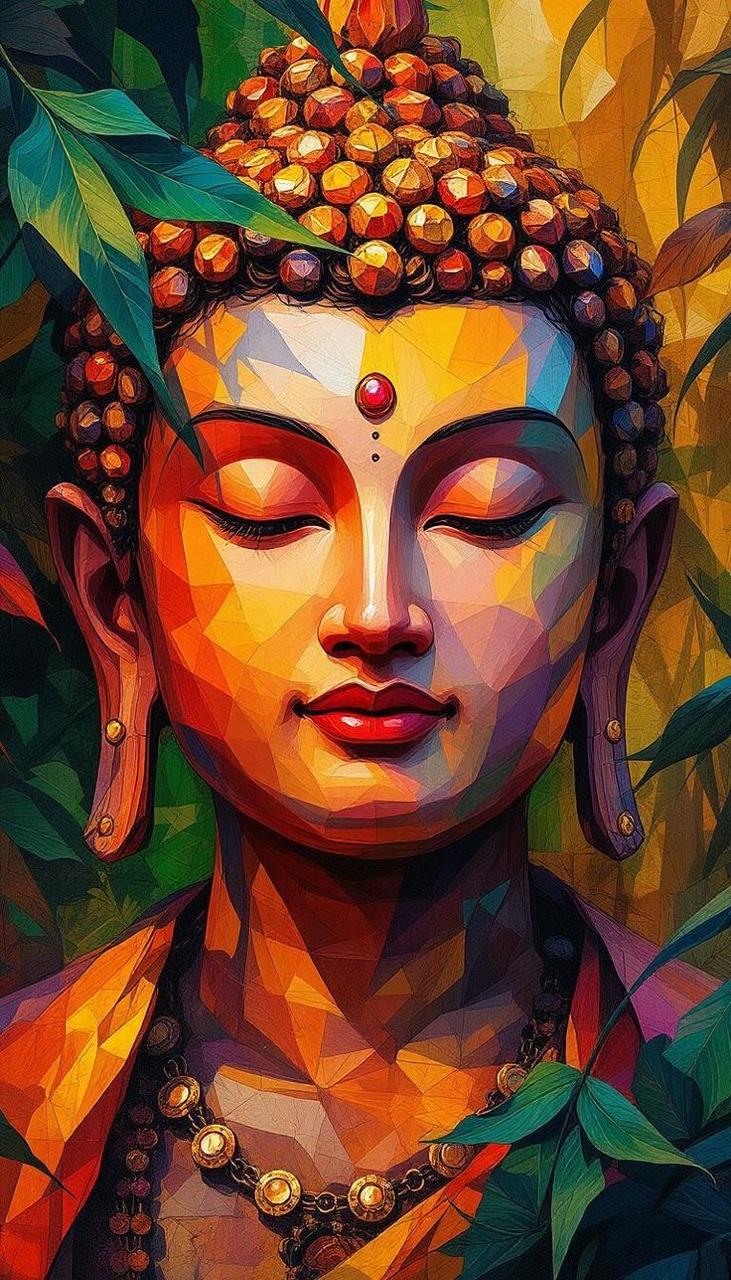
- A quiet corner with a chair. A meditative piece — a cosmic Shiva, a low-poly Buddha — does more in a reading corner than in a busy living room.
- The stairwell landing. Usually forgotten, usually well lit, and tall enough for a portrait canvas.
Practical notes
Keep it away from the kitchen wall that gets hot. Heat and cooking grease are hard on any print, whatever is depicted on it.
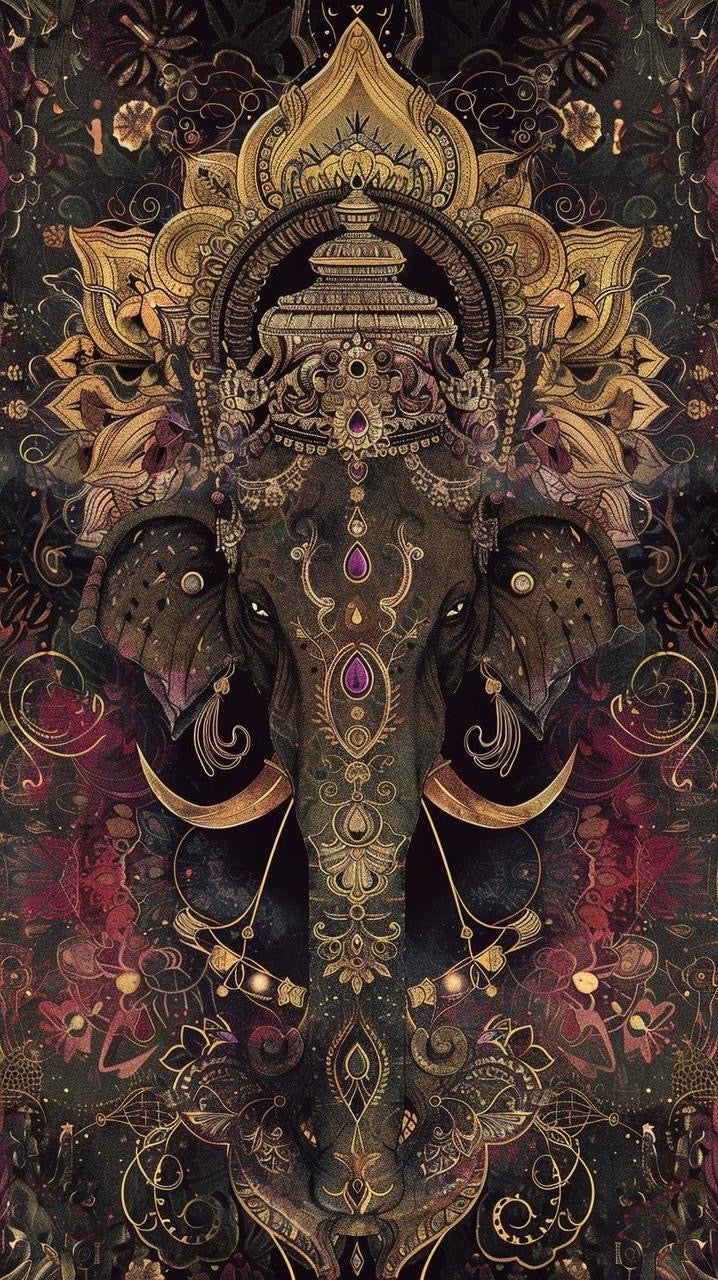
Watch the light. Gold detailing — common in Ganesha mandala and Pichwai-style work — reads beautifully in warm indirect light and disappears under cool white tube light. If your only option is a tube light, a piece with strong contrast will hold up better than one built on subtle gold.
Give it room. Devotional art is the one category where a bit of empty wall around the canvas genuinely helps. Do not crowd it with photo frames.
You can browse the full set in Spiritual & Devotional.