Cart
0
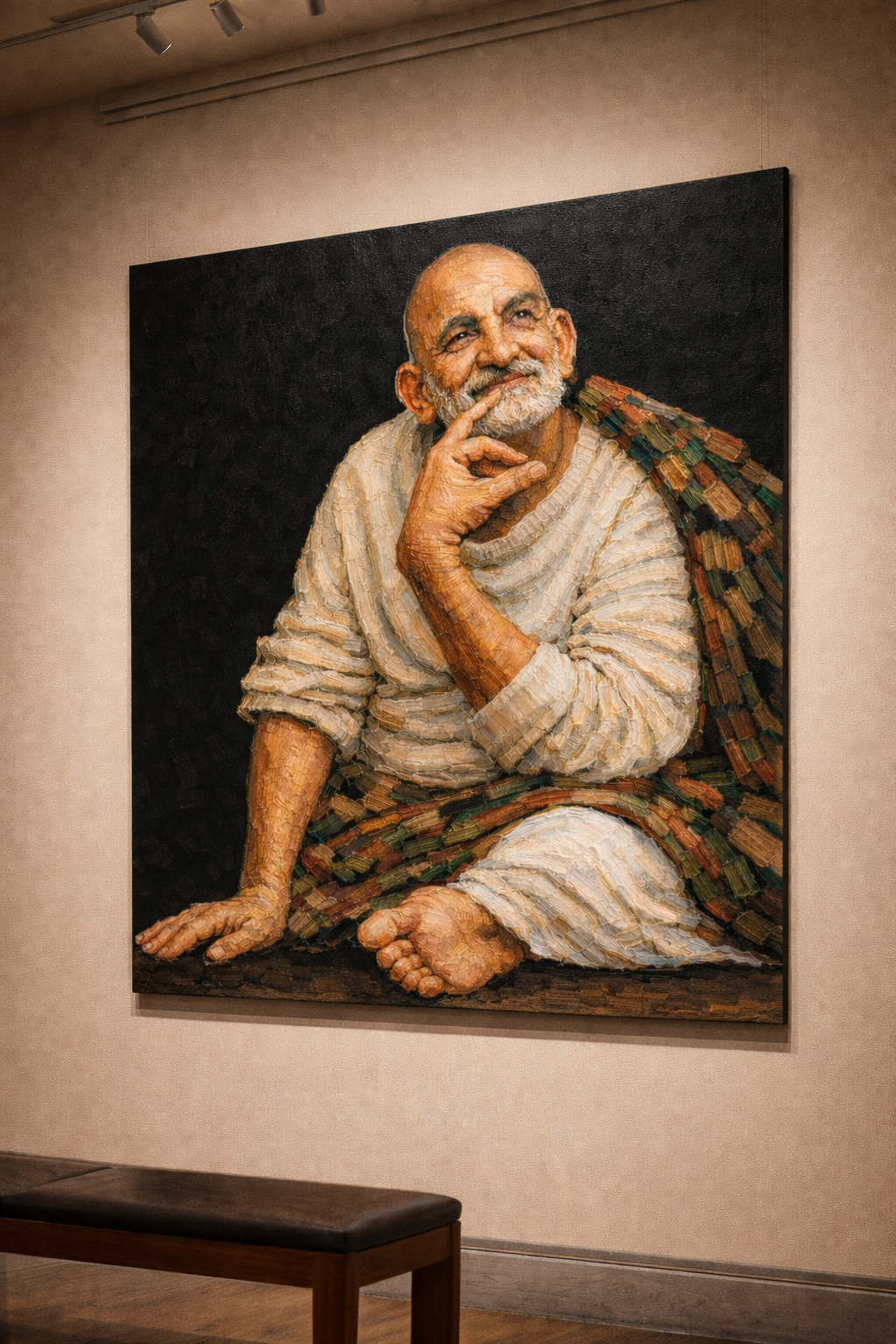
The single most common mistake with wall art is height. Most people hang a canvas from where the hook naturally lands on the wall, which is usually somewhere around shoulder height or above. Galleries do something different, and it is the reason art in a gallery always looks settled rather than floating.
The one measurement that matters
Hang the artwork so that its centre sits about 145 to 152 cm from the floor. That is average standing eye level. It is the number museums use, and it works in a living room just as well.
To find where the hook goes:
- Measure the height of the canvas and halve it.
- Add that half-height to 150 cm. This is where the top of the canvas will sit.
- Measure from the top edge of the canvas down to the hanging wire or bracket when it is pulled taut.
- Subtract that distance from the number in step 2. Mark the wall there. That is your hook.
Example: a 60 cm tall canvas. Half is 30. 150 + 30 = 180 cm for the top edge. If the taut wire sits 8 cm below the top edge, the hook goes at 172 cm.
When to break the rule
- Above a sofa or console. Ignore eye level and use the furniture instead. Leave a gap of 15 to 25 cm between the top of the sofa back and the bottom of the canvas. Any more and the two stop reading as a group.
- Above a bed. Same idea, 20 to 30 cm above the headboard.
- In a stairwell or a room with very high ceilings. Follow the line of the stairs or raise the centre a little, but never centre art on the wall's height. Centre it on the human standing in front of it.
- In a pooja space. Devotional art is usually hung higher, above chest height, so it is looked up at rather than across at. That is a deliberate choice, not a mistake.
The right hook for an Indian wall
Most homes here have solid concrete or brick walls, not the hollow drywall that hanging kits are usually designed for. A plastic sticky hook will hold for a week and then let go on a humid afternoon.
- Concrete or brick: a 6 mm masonry bit, a plastic wall plug, and a screw. It takes five minutes with a hammer drill and it is permanent.
- Hollow partition wall: a toggle or butterfly anchor, not a plain screw.
- Rented flat, no drilling allowed: heavy-duty adhesive strips rated well above the canvas weight, on a clean, dry, painted surface. Press for 30 seconds and wait an hour before hanging. Avoid this in a kitchen or bathroom where the wall gets warm and damp.
A gallery-wrapped canvas is light, usually well under two kilograms, so the fixing rarely needs to be dramatic. The failures we hear about are almost always adhesive hooks on a freshly painted or dusty wall.
Two small things that make a big difference
Check it is level, twice. Once when you hang it, and again after a day. Canvases settle slightly on their wire.
Look at where the light falls. Direct afternoon sun will fade any print over years, and it also creates glare. A wall that gets bright indirect light will show the colours far better than one that gets a beam of sun for two hours a day.
Once the height is right, everything else about the room tends to look more considered too. It is a small correction with a disproportionate effect.